
What You Need to Know About Beagle Puppy Growth Stages
Beagle puppy growth stages follow a clear path from birth through adulthood — and knowing what to expect at each phase helps you raise a healthier, happier dog.
Here is a quick overview of the key stages:
| Stage | Age | Key Development |
|---|---|---|
| Neonatal | 0-2 weeks | Eyes/ears closed; responds to warmth and touch only |
| Transitional | 2-4 weeks | Eyes and ears open; begins to walk |
| Socialization | 4-12 weeks | Learns from littermates and humans |
| Juvenile | 3-6 months | Rapid growth; teething begins |
| Adolescent | 6-18 months | Reaches adult height; filling out continues |
| Maturity | 1-3 years | Full emotional and physical development |
A few fast facts before we dive deeper:
- Beagle puppies weigh just 5-10 ounces at birth
- They grow fastest in their first 3 months
- They reach full height around 8 months but don’t hit adult weight until 18 months
- A Beagle isn’t truly an adult until around 3 years of age — longer than many people expect
Beagles were originally bred in England as pack hunters, built to follow scent trails for hours. They carry 220 million scent receptors — compared to just 5 million in humans. That nose-first curiosity shapes everything about how they develop, learn, and behave as puppies.
Understanding each growth stage means you can feed the right amounts, train at the right times, and catch health issues early — before they become serious problems.
The Core Beagle Puppy Growth Stages: From Birth to Adulthood
The journey of a Beagle puppy is a whirlwind of floppy ears and wagging tails. To navigate this adventure, we need to break down the beagle puppy growth stages into manageable milestones.
The Neonatal Period (0–12 Days)
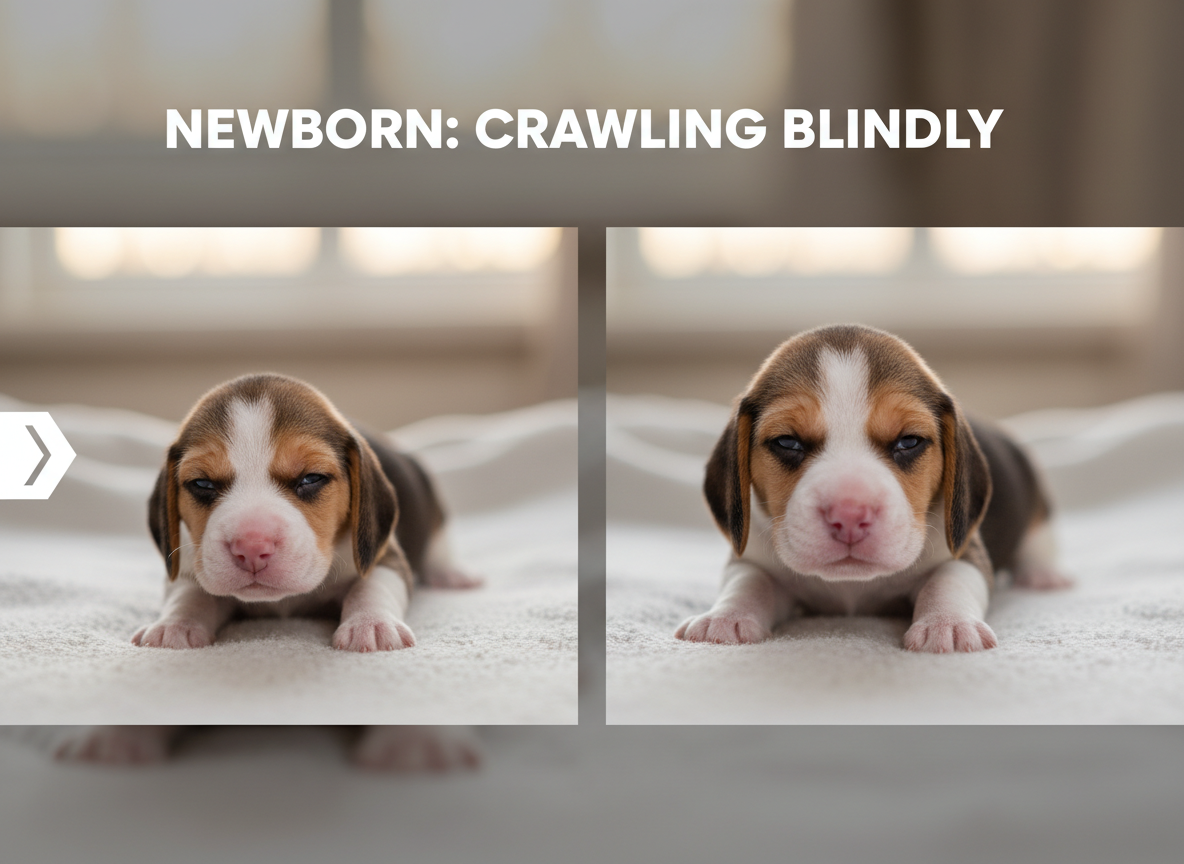
In this first stage, your puppy is essentially a tiny, squeaky potato. They are born with their eyes and ears closed, relying entirely on their mother for warmth and nutrition. At this age, a Beagle puppy responds only to touch, smell, and warmth. We recommend keeping the room temperature between 76-80 degrees Fahrenheit during this period to support their fragile systems. They will double their birth weight by the end of the first week!
The Transition Phase (13–20 Days)
This is when the world starts to open up. Their eyes begin to unseal, and their ears follow shortly after. You’ll see them transition from crawling to a wobbly, drunken-style walk. This is a magical time when they first begin to notice their littermates and their surroundings.
The Awareness Window (21–28 Days)
During this week, the puppy’s senses are fully functioning. It is vital to provide a stable, calm environment because sudden loud noises or traumatic changes can impact them deeply. They are starting to learn that they are dogs!
Canine Socialization (21–49 Days)
This is where the “pack” mentality begins to take root. Littermates learn how to be dogs by playing, biting, and interacting. They learn “bite inhibition”—the hard way—when a sibling yelps because they nipped too hard. According to the Beagle Growth Stages With A Useful Manual For All New Owners, missing these handling techniques in any phase can be detrimental to the dog’s long-term temperament.
Socialization and Fear Periods in Beagle Puppy Growth Stages
As the puppy moves into your home (usually between 7 and 12 weeks), they enter the most critical windows for training and emotional development.
Human Socialization (7–12 Weeks)
This is the “Golden Window.” By 7-12 weeks, a puppy’s brain waves match those of an adult dog. This is the absolute best time to introduce them to new people, sights, and sounds. We suggest using effective-obedience-training-tips-for-beagle-puppies/ to start building a bond based on trust and positive reinforcement.
Fear Impact Period (8–11 Weeks)
Be careful during this time! Any traumatic experience during this window can leave a permanent scar on their psyche. If your puppy seems like a “woosy butt” (as some breeders jokingly say) during this phase, don’t worry—it’s a natural part of their development. Use gentle encouragement rather than force. using-clicker-training-for-your-beagle-puppy/ is a fantastic way to build confidence through reward-based learning.
Flight Instinct Period (4–8 Months)
Suddenly, your cuddly puppy might “forget” their name or decide that a squirrel is more interesting than your call. This is the flight instinct period. We recommend using a 12-foot long lead during walks to give them freedom while ensuring they can’t actually bolt.
Second Fear Impact (6–14 Months)
Just when you thought you were in the clear, your adolescent Beagle might suddenly become afraid of the toaster or a trash can. This often corresponds with physical growth spurts. Patience is key here—don’t coddle the fear, but don’t punish it either.
Physical Milestones and Teething During Beagle Puppy Growth Stages
Physical growth is just as dramatic as behavioral changes. One of the most “chew-heavy” milestones is teething.
- Baby Teeth (3–7 Weeks): These tiny “land shark” teeth erupt while the puppy is still with the litter.
- Permanent Teeth (3–6 Months): At around 12 weeks, those baby teeth start falling out (you might find them on the floor!). By 6 months, a Beagle should have its full set of 42 adult teeth.
- Growth Plates: It is important to remember that a Beagle’s growth plates don’t fully close until they are nearly one year old. According to the Beagle Puppy Training Timeline: What to Expect and When to Expect It, you should avoid excessive jumping or high-impact exercise until this point to prevent long-term joint damage.
Beagle Weight and Height: Tracking Healthy Development
Beagles come in two sizes recognized by the AKC, and knowing which variety yours belongs to is the first step in tracking their growth.
The Two Varieties
- The 13-Inch Variety: These Beagles stand under 13 inches at the shoulder and should weigh under 20 pounds as adults.
- The 15-Inch Variety: These stand between 13 and 15 inches and typically weigh between 20 and 30 pounds.
| Age | 13-Inch Variety (Weight) | 15-Inch Variety (Weight) |
|---|---|---|
| 1 Month | 2-3 lbs | 3-4 lbs |
| 3 Months | 6-8 lbs | 8-10 lbs |
| 6 Months | 12-15 lbs | 15-20 lbs |
| 1 Year | 18-20 lbs | 22-30 lbs |
Males tend to be slightly larger and heavier than females. For instance, a 6-month-old male might weigh 14-18 pounds, while a female of the same age might be 12-16 pounds.
Predicting Adult Size
If you’re wondering how big your little hound will get, there are a few handy tricks. You can find more details in Understanding Your Beagle’s Growth: A Comprehensive Weight and Growth Chart Guide.
- The 14-Week Formula: Take your puppy’s weight at 14 weeks and multiply it by 2.5. This gives a rough estimate of their adult weight.
- The 6-Month Height Formula: Take their height at 6 months (in inches) and multiply by 100, then divide by 75.
- The Paw Method: Look at those paws! If they look “oversized” for their body, your Beagle likely has more filling out to do.
Nutritional Needs for a Growing Beagle
Beagles are “chowhounds.” They would eat until they popped if we let them. Because they grow so fast in the first three months, their nutritional needs are intense.
Calorie and Protein Requirements
Growing puppies need more protein than adults to build muscle and bone. Look for a high-quality puppy food that contains:
- Protein: 22% to 32%
- Fat: 8% to 18%
A typical Beagle puppy weighing between 10-25 pounds may need around 990 calories per day, split into 3 or 4 small meals. This helps maintain steady blood sugar levels and prevents the “growth spurts” from being too erratic. For more specific diet advice, check out best-diet-for-beagle-puppys-rapid-growth/ and best-diet-for-beagle-puppies-growth/.
Transitioning to Adult Food
We generally recommend transitioning from puppy food to adult food around the 10-month mark. By this time, their rapid height growth has slowed down.
- The Two-Week Rule: Never switch foods overnight. Take 14 days to gradually mix more adult food into the puppy kibble to avoid GI upset.
- Obesity Prevention: This is the biggest challenge for Beagle owners. 51% of adult Beagles are overweight or obese. You should be able to feel their ribs without pressing hard, and they should have a visible “tummy tuck” when viewed from the side.
Training and Behavioral Milestones
Training a Beagle is a lesson in patience and humor. They are incredibly intelligent but also notoriously stubborn—especially when their nose catches a scent.
Potty Training and Crate Training
Beagles can be slower to housebreak than other breeds, often taking 6-8 months to be fully reliable.
- Consistency is key: Take them out every hour and immediately after eating or sleeping.
- Crate Training: This is a lifesaver. It provides a safe “den” and prevents them from getting into trouble when you aren’t looking. We have a detailed guide on mastering-crate-training-for-your-beagle/ and in-depth-guide-potty-training-your-beagle-puppy/ to help you through the “accidental” phase.
Managing the Adolescent Beagle
Between 6 and 18 months, your Beagle is an adolescent. They will test boundaries. They might suddenly “lose” their recall skills.
- Mental Stimulation: A bored Beagle is a destructive Beagle. Use puzzle toys and scent games to tire out their brain.
- The Scent Factor: If a Beagle smells something interesting, their ears “close.” Never let a Beagle off-leash in an unenclosed area until their recall is 100%—and even then, be cautious.
Common Health Issues During Growth
While Beagles are generally hardy dogs with a lifespan of 12-15 years, there are several breed-specific issues to monitor during their growth stages.
- Cherry Eye: This is a prolapse of the third eyelid gland. It looks like a red fleshy mass in the corner of the eye. It’s common in puppies and usually requires a simple surgery.
- IVDD (Intervertebral Disk Disease): Because of their long backs, Beagles are prone to disk issues. Avoid letting your puppy jump off high furniture, especially before their growth plates close.
- Epilepsy: Beagles are prone to idiopathic epilepsy, which typically shows up between 6 months and 3 years of age.
- Hip Dysplasia and Patellar Luxation: Monitoring their “kneecap score” and ensuring they don’t grow too fat too fast can help prevent these joint issues.
For a deeper dive into long-term health, see our complete-guide-to-caring-for-beagles/.
Frequently Asked Questions about Beagle Development
When is a Beagle fully grown?
A Beagle usually reaches its full adult height by 8 to 10 months. However, they aren’t “finished” yet. They will continue to fill out, gain muscle, and reach their final adult weight by 18 months. Emotionally, a Beagle is considered an adolescent until they are 3 years old.
How much should a 6-month-old Beagle weigh?
Depending on their variety, a 6-month-old Beagle typically weighs between 12 and 20 pounds. If your puppy’s parents were on the larger side (15-inch variety), expect them to be closer to the 20-pound mark.
Are Beagles hard to potty train?
They can be “challenging.” Beagles are scent-oriented and stubborn. If they have an accident in the house and the scent isn’t completely removed with an enzymatic cleaner, they will return to that spot. With a strict schedule and positive reinforcement, most are housebroken by 6-8 months.
Conclusion
Raising a Beagle is a big adventure filled with melodic howls, frantic tail wags, and a lot of nose-to-the-ground exploration. By understanding the beagle puppy growth stages, you aren’t just watching them get bigger—you’re helping them become well-adjusted members of your pack.
From the tiny neonatal days to the boundary-testing adolescent months, each stage requires a different approach to nutrition, training, and health care. We at FinanceFlowX are dedicated to helping you navigate these milestones with confidence. A healthy Beagle is a lean Beagle, and a happy Beagle is one that has a “job” to do—even if that job is just finding the hidden treat in the living room.
For more expert advice on raising your hound, check out our More info about Beagle care. Happy trailing!
